
If you've spent any time shopping for collagen peptides, you've probably noticed that some products proudly advertise "grass-fed" on the label while others say nothing about sourcing at all. It raises a fair question: is grass-fed collagen actually better, or is it just a marketing term that justifies a higher price?
The short answer is that sourcing genuinely matters — and understanding why helps you make a more informed decision about what you're putting into your body every day.
Where Does Bovine Collagen Come From?
Bovine collagen peptides are derived from the hides of cattle. During processing, the collagen-rich hide material is hydrolyzed — broken down into smaller peptide chains that the body can absorb efficiently — and dried into the fine powder you scoop into your coffee or smoothie each morning.
The quality of that raw material is directly influenced by the life the animal lived. What the animal ate, how it was raised, and the conditions it lived in all affect the nutritional composition of the collagen it produces. This is the same principle that applies to beef, dairy, and other animal-derived foods — and it applies equally to collagen supplements.
What "Grass-Fed" Actually Means
A grass-fed cow eats what cattle evolved to eat: grass and other foraged plants. Pasture-raised cattle graze freely on open land, moving naturally and living as close to their natural state as farming allows.
Grain-fed cattle, by contrast, are typically raised in feedlot conditions and fed a diet of corn, soy, and other grains — foods that are cheaper to produce at scale but fundamentally different from what cattle are biologically designed to eat. Feedlot conditions also tend to involve more confined spaces and a higher reliance on antibiotics to manage health in densely populated environments.
These differences in diet and living conditions translate directly into differences in the animal's biology — and by extension, the collagen derived from it.
How Sourcing Affects Collagen Quality
Amino acid profile. Collagen is made up of amino acids — primarily glycine, proline, and hydroxyproline. The overall amino acid composition of collagen from grass-fed cattle tends to be cleaner and more consistent compared to grain-fed sources. When an animal's diet and health are optimal, the proteins it produces reflect that.
Absence of unnecessary additives. Grass-fed, pasture-raised cattle are typically raised without the routine use of antibiotics and added hormones that are more common in conventional feedlot operations. When you're taking a supplement every single day, the cleanliness of the source matters more than it would for something you consume occasionally.
No fillers or hidden inputs. A quality grass-fed collagen product should contain one ingredient: collagen peptides. Full stop. Many lower-cost collagen products use grain-fed sources and compensate with fillers, artificial flavors, or proprietary blends that obscure what's actually inside. Reading the ingredient label carefully tells you a lot about what a brand actually prioritizes.
What "Pasture-Raised" Adds to the Picture
Grass-fed and pasture-raised are related but distinct terms, and both matter.
Grass-fed refers primarily to diet — the animal ate grass rather than grain. Pasture-raised refers to how the animal was kept — it had genuine access to open pasture and could move and graze freely, rather than being confined to a feedlot.
The best collagen products are both grass-fed and pasture-raised. This combination means the animal ate an appropriate diet and lived in conditions that support natural health — both of which contribute to the quality of the collagen it produces.
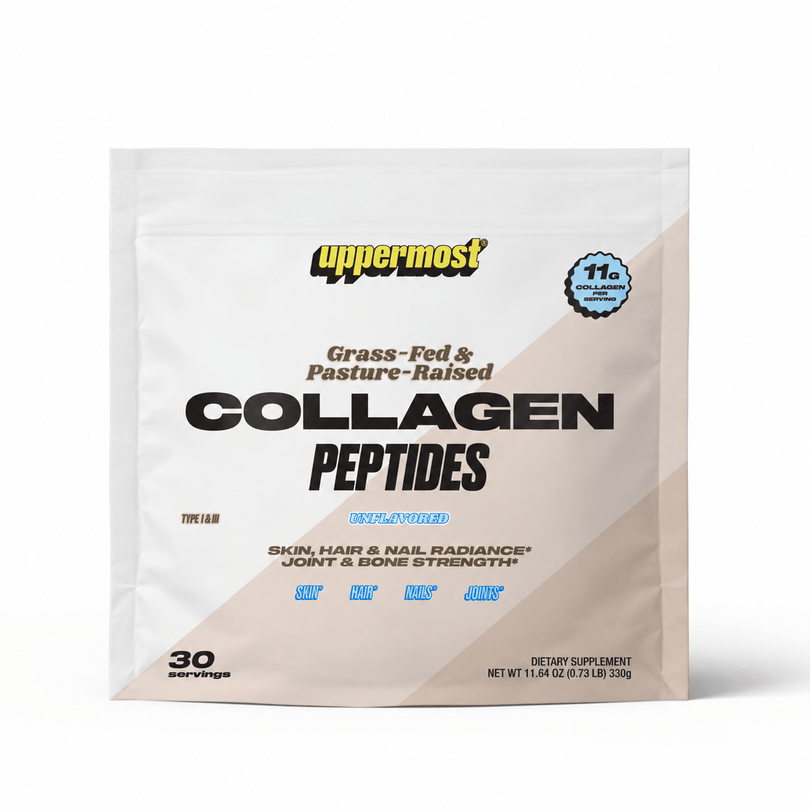
Uppermost Collagen Peptides are sourced exclusively from grass-fed, pasture-raised bovine cattle in Argentina. Argentina's climate allows cattle to graze on open pastures year-round — not seasonally, not partially, but continuously throughout their lives. This is the standard that genuinely sets a sourcing claim apart from one that's technically true but practically minimal.
Does Geography Matter?
It can. Not all grass-fed claims are equal, and the country of origin often signals something meaningful about the standard of pasture and farming practice.
Argentina has a long-established reputation for high-quality, pasture-raised cattle farming. The climate, the land, and the farming culture are all oriented around cattle that graze freely on natural grassland — which is why Argentine beef has historically been regarded as among the best in the world. The same conditions that produce exceptional beef produce exceptional collagen.
This is worth paying attention to on a label. A product that simply says "grass-fed" without specifying the source country may be drawing from cattle that had limited pasture access, grazed only during certain seasons, or were transitioned to grain finishing before slaughter. Transparency about origin is a meaningful signal of a brand that has nothing to hide.
Why It Matters More for a Daily Supplement
Here's the argument that often gets overlooked in this conversation: you're not eating a grass-fed steak once a week. You're taking a collagen supplement every single day, indefinitely.
That daily accumulation changes the calculus significantly. Small differences in source quality, amino acid profile, and the presence or absence of unwanted inputs add up meaningfully over months and years of consistent use. The supplement you take every morning deserves at least the same sourcing scrutiny you'd apply to the food on your plate.
This is also why "grass-fed" isn't just a premium label to justify a higher price — it's a signal about what a brand actually values. Brands that source well tend to be the same brands that formulate cleanly, label transparently, and stand behind their product with guarantees.
What to Look for on a Collagen Label
When evaluating any collagen product for sourcing quality, here's a simple checklist:
- Does it specify grass-fed and pasture-raised? Both terms together are the standard to look for — not just one.
- Does it name the country of origin? Transparency here is a positive signal.
- Is the ingredient list short? Quality collagen products need very little else. If there's a long list of additives, something is being compensated for.
- Is it hydrolyzed? This is non-negotiable for absorption — standard collagen molecules are too large to absorb efficiently.
- Is it third-party tested or certified? Non-GMO verification and similar certifications add an additional layer of accountability.
Uppermost Collagen Peptides are grass-fed, pasture-raised, sourced from Argentina, hydrolyzed, non-GMO, gluten-free, and contain exactly one ingredient. That's the standard.
The Bottom Line
Grass-fed vs. grain-fed collagen is not a purely cosmetic distinction. Sourcing affects amino acid quality, the cleanliness of the final product, and what you're actually putting into your body with every daily scoop. For a supplement you're committing to long-term, it's worth choosing one that's transparent about where it comes from and how it was raised.
Not all collagen is created equal — and the label tells you more than most people realize.
Uppermost Grass-Fed Collagen Peptides — sourced from grass-fed, pasture-raised bovine in Argentina. One ingredient. Nothing artificial, ever. Shop now.