


Intermittent fasting has become one of the most researched and widely adopted approaches to weight management, metabolic health, and longevity. But as fasting routines grow more nuanced, so do the questions around them — and one of the most common is: does MCT oil break a fast?
The honest answer is: it depends on your goal. MCT oil contains calories, so in the strictest sense it ends a zero-calorie fast. But fasting is rarely one-dimensional — the more useful question is whether MCT oil disrupts the specific physiological state you're trying to achieve.
This guide breaks it down clearly, so you can make an informed decision based on your individual fasting objective.
What Is MCT Oil?
MCT stands for medium-chain triglycerides — a category of saturated fat found naturally in coconut oil, palm kernel oil, and dairy. What makes MCTs unique is the length of their fatty acid chains: they're shorter than the long-chain fats found in most foods, which means they bypass the typical digestive pathway and travel directly to the liver, where they're rapidly converted into ketones.
This metabolic shortcut makes MCT oil a favourite among people following ketogenic diets and those who use fasting to sustain energy and mental clarity throughout the day.
There are four main types of MCTs, each with distinct properties:
- C6 – Caproic Acid: Rare in supplements. Converts quickly but can cause significant digestive discomfort.
- C8 – Caprylic Acid: The gold standard for fasting. The most ketogenic MCT, converting to ketones faster than any other type.
- C10 – Capric Acid: Commonly paired with C8 for a broader benefit profile. Converts slightly slower but remains highly effective.
- C12 – Lauric Acid: Behaves more like a long-chain fat. Less ideal for fasting applications.
For fasting purposes, look for products high in C8 (caprylic acid) — it produces ketones the fastest and has the least impact on insulin.
What Does "Breaking a Fast" Actually Mean?
This is where most of the confusion lives. "Breaking a fast" isn't a single event — it means different things depending on what you're fasting for. There are three primary biological processes that fasting is designed to trigger:
Caloric restriction: The simplest definition — no calories in. Any caloric intake, regardless of source, technically ends this state.
Ketosis: A metabolic state in which the body burns fat instead of glucose as its primary fuel. This is disrupted mainly by carbohydrates and protein, not necessarily by dietary fat.
Autophagy: The body's cellular self-cleaning process, triggered by the complete absence of nutrients. Even small amounts of dietary fat may slow this process down.
The key insight: MCT oil affects each of these differently. Understanding which one matters most to you is the most important step before deciding whether to use MCT oil during a fast.
MCT Oil and Your Fasting Goal
Caloric Restriction
A tablespoon of MCT oil contains approximately 100 calories. If your fast is strictly defined by zero caloric intake, MCT oil will end it — full stop. That said, for most people, caloric restriction is a means to an end (weight management, metabolic reset), not the goal in itself. Whether those calories derail your progress depends on context.
Verdict: MCT oil breaks a strict caloric fast.
Ketosis and Fat Burning
Ketosis is driven by low insulin and low blood glucose — not strictly by the absence of all calories. MCT oil, particularly C8, converts so rapidly to ketones that it can actually elevate your ketone levels rather than suppress them. Crucially, MCT oil does not trigger a meaningful insulin response, which is the primary hormone that pulls the body out of a fat-burning state.
For people fasting to sustain ketosis, support fat burning, or maintain metabolic health, MCT oil is generally considered compatible — and in many cases, beneficial.
Verdict: MCT oil does not break a ketosis-focused fast. It may enhance it.
Autophagy
Autophagy is more sensitive. Research suggests it's triggered by nutrient deprivation at the cellular level — not just the absence of carbohydrates or protein. Dietary fat, even in small amounts, may signal that nutrients are available and subtly dampen autophagic activity. If cellular repair and longevity are your primary fasting goals, the safest approach is to stick with water, black coffee, or plain tea during your fasting window.
Verdict: MCT oil likely interrupts autophagy. Avoid it if cellular repair is your primary goal.
Benefits of MCT Oil During a Fast
For those using intermittent fasting for energy, focus, or weight management — rather than strictly for autophagy — MCT oil can offer meaningful advantages within the fasting window.
Sustained mental clarity. Ketones produced from MCT oil cross the blood-brain barrier directly, providing a clean, stable fuel source for the brain. Many people report sharper focus and fewer brain fog episodes mid-fast when using MCT oil — particularly helpful during morning work sessions or demanding cognitive tasks.
Hunger suppression. Fat is satiating. MCT oil can reduce the intensity of hunger during the fasting window without spiking blood sugar or insulin, making it easier to extend your fast comfortably and stick to your eating window.
Faster ketone production. Even if you haven't been following a ketogenic diet, consuming MCT oil during a fast can quickly elevate blood ketone levels, accelerating the shift to fat-fuelled metabolism and helping you feel the benefits of fasting sooner.
Exercise performance while fasted. Fasted training can deplete energy quickly. MCT oil provides a fast-acting fuel source that supports endurance and strength work without the carbohydrate load that would interrupt ketosis.
How to Use MCT Oil During Fasting
If MCT oil aligns with your fasting objectives, timing and dosage make a significant difference — especially for digestive comfort.
Start small. Begin with half a teaspoon per serving. MCT oil can cause digestive discomfort — loose stools or nausea — in larger amounts, particularly on an empty stomach. Build tolerance gradually over one to two weeks before increasing your dose.
Use it in the morning. Adding MCT oil to your morning black coffee or tea is one of the most popular fasting applications. It provides energy and focus without interrupting ketosis, and helps bridge the gap between waking and your first meal.
Take it before fasted workouts. A small dose 15–30 minutes before exercise gives your muscles and brain a fast-acting fuel source, helping you train harder while remaining metabolically in a fasted state.
Address the afternoon slump. If you experience an energy dip during your fasting window, a small serving of MCT oil can restore focus and reduce cravings without the blood sugar swing that comes from snacking.
Dosage guide:
- Beginner: ½ tsp (~2–3g MCTs) — ideal for the first two weeks
- Intermediate: 1–2 tsp (5–10g MCTs) — suitable after initial adaptation
- Experienced: 1–2 tbsp (14–28g MCTs) — appropriate for those fully adapted, especially for fasted training
What to Look for in an MCT Oil Product
Not all MCT oils are created equal. Source, purity, and form all affect how a product performs in a fasting context.
Coconut-derived MCTs only. Palm kernel oil is a common lower-cost alternative but is less sustainable and typically delivers a less favourable MCT profile. Look for products that specify 100% coconut-sourced MCTs.
High C8 concentration. Products dominated by lauric acid (C12) behave more like long-chain fat and provide fewer fasting benefits. Check the label for the MCT breakdown and prioritise caprylic acid (C8).
No maltodextrin. Some powdered MCT products use maltodextrin as a carrier — a starchy carbohydrate that will spike blood sugar and genuinely break a fast. Always check the ingredient list before purchasing.
No artificial additives or fillers. A clean-label product with minimal ingredients is always preferable, particularly when the goal is to keep your fast as undisturbed as possible.
Final Verdict: Does MCT Oil Break a Fast?
| Your Fasting Goal | Does MCT Oil Break It? |
|---|---|
| Strict caloric abstention | Yes |
| Ketosis / fat burning | No — it supports it |
| Autophagy / cellular repair | Likely yes |
| Mental clarity & focus | No — it enhances it |
| Weight management & appetite control | No — it supports your goals |
For the majority of people who fast for metabolic health, weight management, or cognitive performance, MCT oil is a well-suited fasting companion. It provides energy without the insulin spike, supports ketone production, and makes longer fasting windows more sustainable.
The one clear exception is a strict autophagy-focused fast, where complete nutrient absence is essential — in those cases, stick to water and zero-calorie drinks only.
As with any supplement, start small, listen to your body, and adjust accordingly. Fasting is deeply individual — the best protocol is ultimately the one you can sustain long-term.
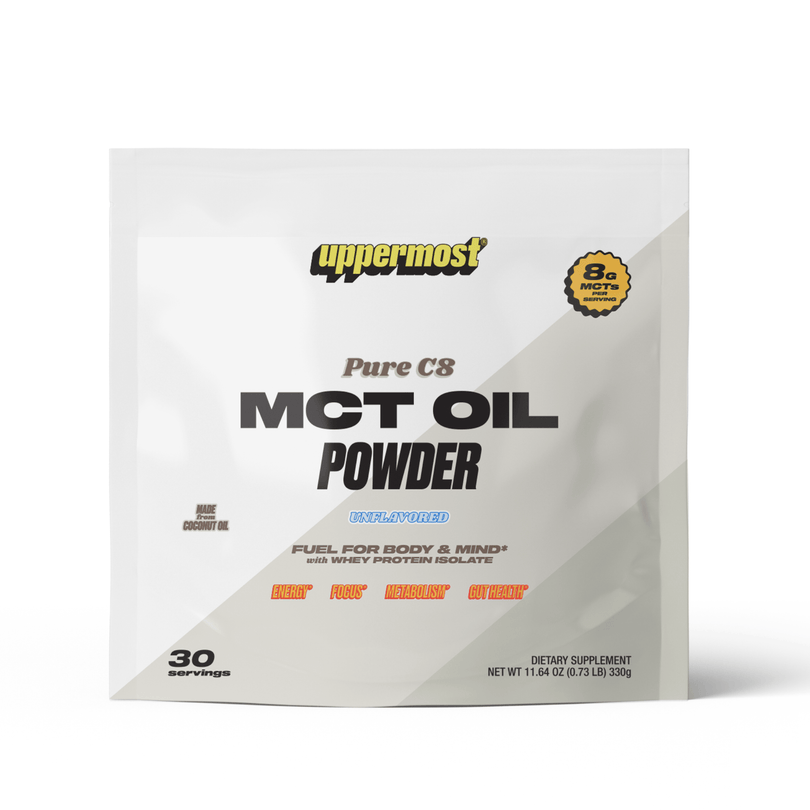
Ready to try a clean, fast-acting MCT oil powder with no fillers and no maltodextrin? Shop Uppermost MCT Oil Powder